European Mistletoe
Viscum album
also known as mistletoe extract
Moderate (cancer adjunct)
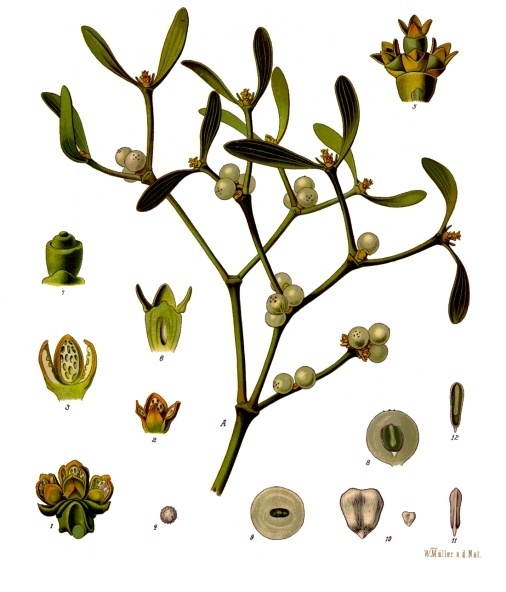
The semi-parasitic plant that grows on European tree branches, gathered traditionally at the winter solstice and central to European folk traditions long before its medical use. Modern medicinal use of European mistletoe began in the 1920s with Rudolf Steiner's anthroposophical medicine, and mistletoe extracts are now widely used in Germany, Switzerland, and Austria as an adjunct to conventional cancer treatment. This is a herb for clinical settings, not self-treatment.
- Used in integrative cancer care across Europe — particularly Germany — as an adjunct to conventional treatment
- May improve quality of life during cancer treatment, including fatigue, sleep, and appetite
- Modulates immune function in laboratory and clinical research
- Long European folk and ceremonial tradition, far predating its modern medical use
- Injectable mistletoe products (Iscador, Helixor, Abnoba) are prescription medications in several European countries
- Always given alongside, never instead of, evidence-based cancer treatment in legitimate medical use
Self-treatment with mistletoe is not appropriate — the herb is used in cancer care under specialist supervision, and the products used clinically are prescription injectables, not over-the-counter supplements
Raw mistletoe berries and unprepared plant material are toxic — have caused poisoning, particularly in children at Christmas
Use caution with immunosuppressants
Skip during pregnancy and nursing
Use caution with blood pressure medications and blood thinners
Cancer treatment claims have sometimes outpaced the evidence — mistletoe is best understood as supportive care, not as a primary cancer treatment
American mistletoe (Phoradendron) is a different plant with different properties and more poisoning concerns
You might also explore