Uva Ursi
also known as bearberry
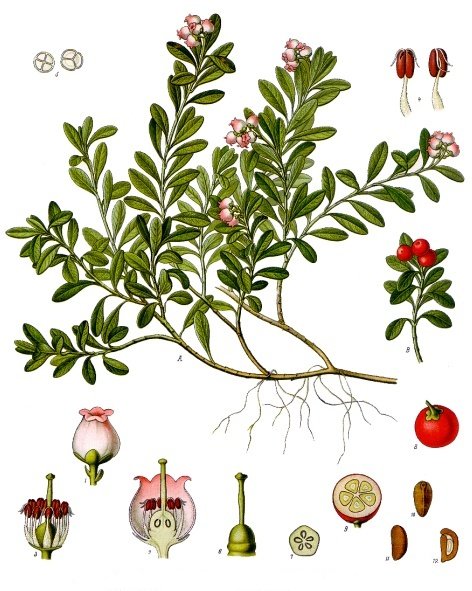
A low-growing evergreen shrub whose name means 'bear's grape' in Latin — bears do eat the red berries, but the leaf is the part used medicinally. One of the oldest documented urinary tract herbs in European medicine, working through a compound that becomes active only when the urine is alkaline.
- Traditional and modern use as a urinary tract antiseptic — for urinary tract infections and inflammation
- Active ingredient (arbutin) becomes hydroquinone in alkaline urine, which has antimicrobial action
- Mild diuretic action
- Approved by Germany's Commission E for inflammation of the urinary tract
- Best taken with foods that alkalinize the urine — pairing with sodium bicarbonate or dietary changes is traditional
- Effects build over days, not minutes — not appropriate for severe or worsening infections
EMA Herbal Medicinal Product Monographs · American Botanical Council HerbMedPro · Memorial Sloan Kettering About Herbs · EMA Herbal Medicinal Product Monographs · American Botanical Council HerbMedPro