
Coltsfoot
also known as coltsfoot leaf
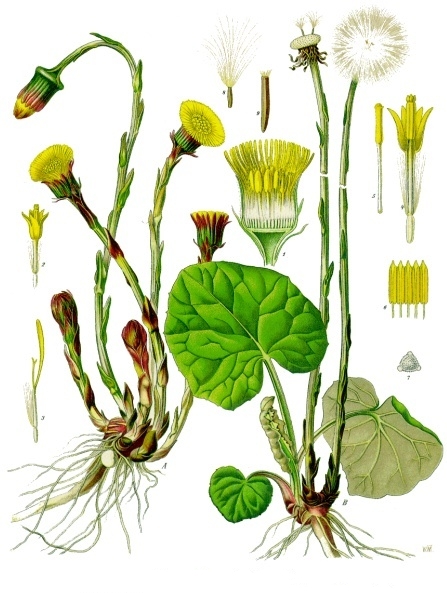
A bright yellow early-spring wildflower whose leaves and flowers were used in European folk medicine for cough and respiratory complaints — the Latin name 'tussilago' means 'cough remedy.' But coltsfoot contains pyrrolizidine alkaloids that cause irreversible liver damage, and the herb has been restricted or withdrawn in most regulated markets. The traditional use is real; the risk is also real.
- Long traditional European use for cough, bronchitis, and respiratory irritation
- Mucilage content provides mild soothing of irritated airway tissue
- PA-free preparations (where the toxic alkaloids have been removed) retain the soothing effects without the liver risk — but quality control varies
- Other safer respiratory herbs — mullein, marshmallow, slippery elm, plantain — have similar soothing effects without coltsfoot's safety concerns
EMA Herbal Medicinal Product Monographs · American Botanical Council HerbMedPro · Memorial Sloan Kettering About Herbs · EMA Herbal Medicinal Product Monographs · American Botanical Council HerbMedPro