
Fenugreek
Trigonella foenum-graecum
also known as methi
Moderate
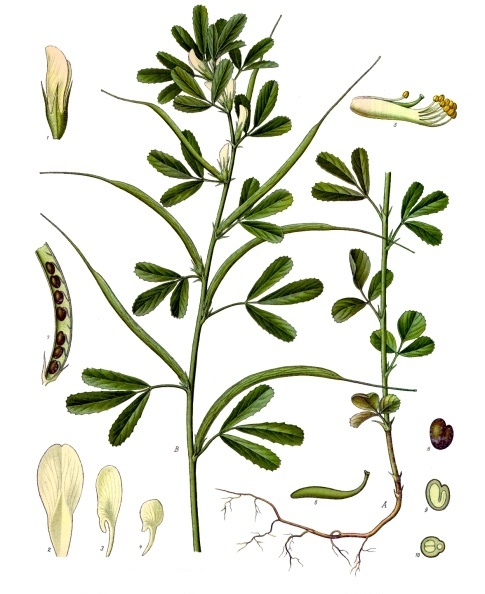
A small clover-like legume used as a spice and medicine across the Mediterranean, Middle East, India, and Africa for over four thousand years. Fenugreek seeds have a distinctive maple-syrup smell that becomes noticeable in sweat and breath after eating them — an actual phenomenon with a name (the 'maple syrup' smell) that can show up on newborns whose mothers ate fenugreek during nursing. Modern research backs traditional uses for blood sugar, milk supply, and digestion.
- May modestly support healthy blood sugar in type 2 diabetes — best as part of a bigger lifestyle picture
- Long traditional use to support milk supply during nursing — part of many lactation tea blends
- May modestly increase testosterone in some men, though research is mixed
- Bitter and mucilaginous — soothes and stimulates digestion at the same time
- Ground seeds give the maple-syrup-like flavor of imitation maple syrup
- Long traditional use across Indian (methi), Middle Eastern, and Mediterranean cooking and medicine
May lower blood sugar — caution with diabetes medication
Mild blood-thinning effect — caution with blood thinners
Stop two weeks before surgery
Skip high-dose medicinal use during pregnancy — fenugreek can stimulate the uterus and has been associated with preterm birth at high doses
Cross-reactive with peanut, chickpea, and soy allergies (fenugreek is a legume)
Causes the body's secretions (sweat, urine, breast milk) to smell like maple syrup — this is harmless but startling, and has caused unnecessary newborn workups for maple syrup urine disease (a serious unrelated genetic condition)
Can cause stomach upset and gas at higher doses
Use caution with thyroid medication and lithium
Related literature · not reviewed for these claims
These papers were imported by topic. They may concern plants, laboratory work, or different preparations. Inclusion here does not establish a human health benefit or support the claims above. How to read our sources →
- Assessing the safety of herbal medicine use among type 2 diabetes mellitus patients: A systematic review and meta-analysis.
- Balancing Nutrient Enrichment and Heavy Metal Stress: Impacts of Wastewater Irrigation on Aromatic Crops.
- In vitro and in silico evaluation of copper nanoparticle-phytoconjugates as multi-target antidiabetic agents.
- The gasotransmitters hydrogen sulfide and nitric oxide independently regulate growth, physiology, and secondary metabolism in fenugreek (Trigonella foenum-graecum L.).
- Fenugreek (Trigonella foenum-graecum) and its Active Compounds, Diosgenin and Trigonelline, in the Prevention of Cancer and Aging: A Systematic Review of Preclinical Studies.
You might also explore
Common questions
It's one of the most traditional uses, showing up in lactation teas for a long time, and it has long-standing traditional support, though modern research is more mixed than the tradition suggests.
NIH NCCIH
This is real and completely harmless. Fenugreek seeds have a natural maple-syrup-like compound that shows up in sweat, urine, and even breast milk after you eat them. It's actually caused unnecessary medical worry before, since it can resemble a rare unrelated genetic condition with a similar smell, but on its own it's nothing to worry about.
Some research suggests a modest increase in some men, but the evidence is mixed enough that it shouldn't be relied on as a primary strategy.
Be cautious. Fenugreek is a legume, in the same family as peanuts, chickpeas, and soy, and cross-reactive allergic reactions are possible.