
Yerba Mate
also known as maté
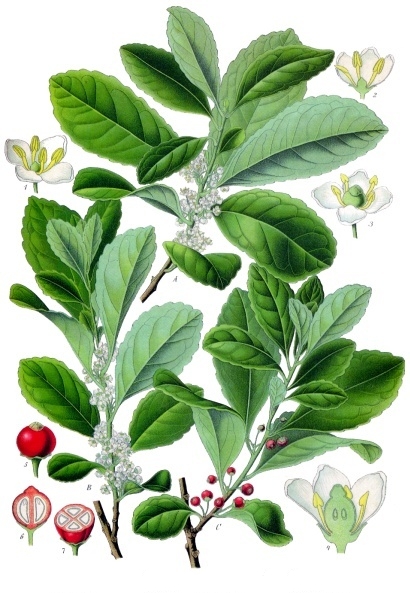
Leaves from a South American holly tree, traditionally drunk as a shared social beverage from a hollowed gourd through a metal straw across Argentina, Uruguay, Paraguay, and southern Brazil. Yerba mate contains caffeine alongside other gentler stimulants, giving it a different feel than coffee — energizing without quite the same jittery edge for most people.
- Provides caffeine for energy and mental focus — typically 30 to 50 mg per cup, less than coffee
- Contains theobromine (the same compound in chocolate) and theophylline, which add to the energizing effect more gently
- Rich in antioxidants — particularly chlorogenic acids and saponins
- May modestly support healthy cholesterol and blood sugar
- Traditionally used to suppress appetite, with some modern evidence
- Long traditional South American social use as a daily beverage shared from a single gourd in groups
Memorial Sloan Kettering About Herbs · EMA Herbal Medicinal Product Monographs · American Botanical Council HerbMedPro · Memorial Sloan Kettering About Herbs · EMA Herbal Medicinal Product Monographs · American Botanical Council HerbMedPro