
Pomegranate
Punica granatum
also known as pomegranate fruit, pomegranate extract
Moderate
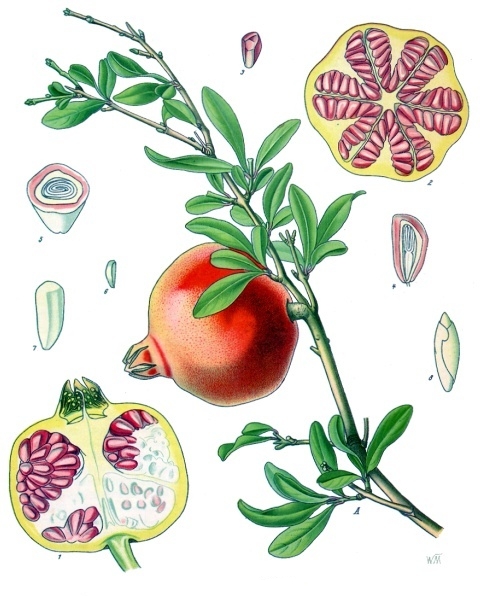
An ancient Middle Eastern fruit named in nearly every old medical tradition — Egyptian, Greek, Ayurvedic, Persian, biblical. Modern research focuses on the seed-arils and juice, which are exceptionally rich in antioxidants. The most consistent evidence is for cardiovascular and prostate support.
- Modestly lowers blood pressure with daily juice or extract
- Modestly improves blood vessel function — measured as flow-mediated dilation
- Powerful antioxidant action from punicalagins, the main polyphenols in the fruit
- May slow the rise of PSA in men with prostate cancer who have completed treatment
- Anti-inflammatory action documented in multiple settings
- Long traditional use as a fertility and longevity fruit
- Most evidence comes from the juice, the arils (seed pulps), and standardized extracts — not the rind
Pomegranate juice can interact with certain medications by affecting how the liver processes them — caution with statins, blood pressure medications, and blood thinners
Use caution with diabetes medication — juice contains real sugar even though it improves long-term blood sugar regulation
Skip the rind and root bark in any quantity — both are toxic
Skip large medicinal doses during pregnancy — culinary amounts are fine
Related literature · not reviewed for these claims
These papers were imported by topic. They may concern plants, laboratory work, or different preparations. Inclusion here does not establish a human health benefit or support the claims above. How to read our sources →
- Ameliorative potential of pomegranate juice against synthetic colorant (E124)-induced biochemical and histopathological changes in the rat brain and testes.
- Therapeutic effects of pomegranate hot-water extract via inhibition of apoptosis and oxidative stress in a DHEA-induced mouse model of PCOS.
- Phytochemicals as inhibitors of pathogenesis to combat ostertagiosis, toxocariasis, trichostrongylosis and trichuriasis in cattle: A systematic review.
- Polyamine treatments: an effective strategy to improve crop yield and fruit colour and to preserve quality of 'Mollar de Elche' pomegranate fruit during storage at chilling temperatures.
- Biodegradable poly(vinyl alcohol) films reinforced with zinc oxide-functionalized carbon nanosheets derived from Punica granatum peels for sustainable food packaging.
You might also explore
Common questions
The seed-arils (the juicy red pulp) and the juice made from them. The rind and root bark are actually toxic and should be avoided entirely — the benefits come specifically from the fruit itself, not the whole plant.
NIH NCCIH
Yes, and this one is worth knowing. Pomegranate juice affects how the liver processes certain drugs, similar to grapefruit juice. That includes some statins, blood pressure medications, and blood thinners. Check with your pharmacist if you take any of those regularly.
It contains real sugar, so yes, in the short term. But longer-term studies show it can actually help regulate blood sugar overall. If you have diabetes, this is worth discussing with your provider rather than assuming either way.
There's promising research specifically in men who've completed treatment for prostate cancer, showing pomegranate may help slow the rise of PSA levels. It's not a substitute for medical follow-up, but it's one of the more studied fruit-based supports in that area.