
Goldenseal
Hydrastis canadensis
also known as orange root
Moderate (topical antimicrobial only)
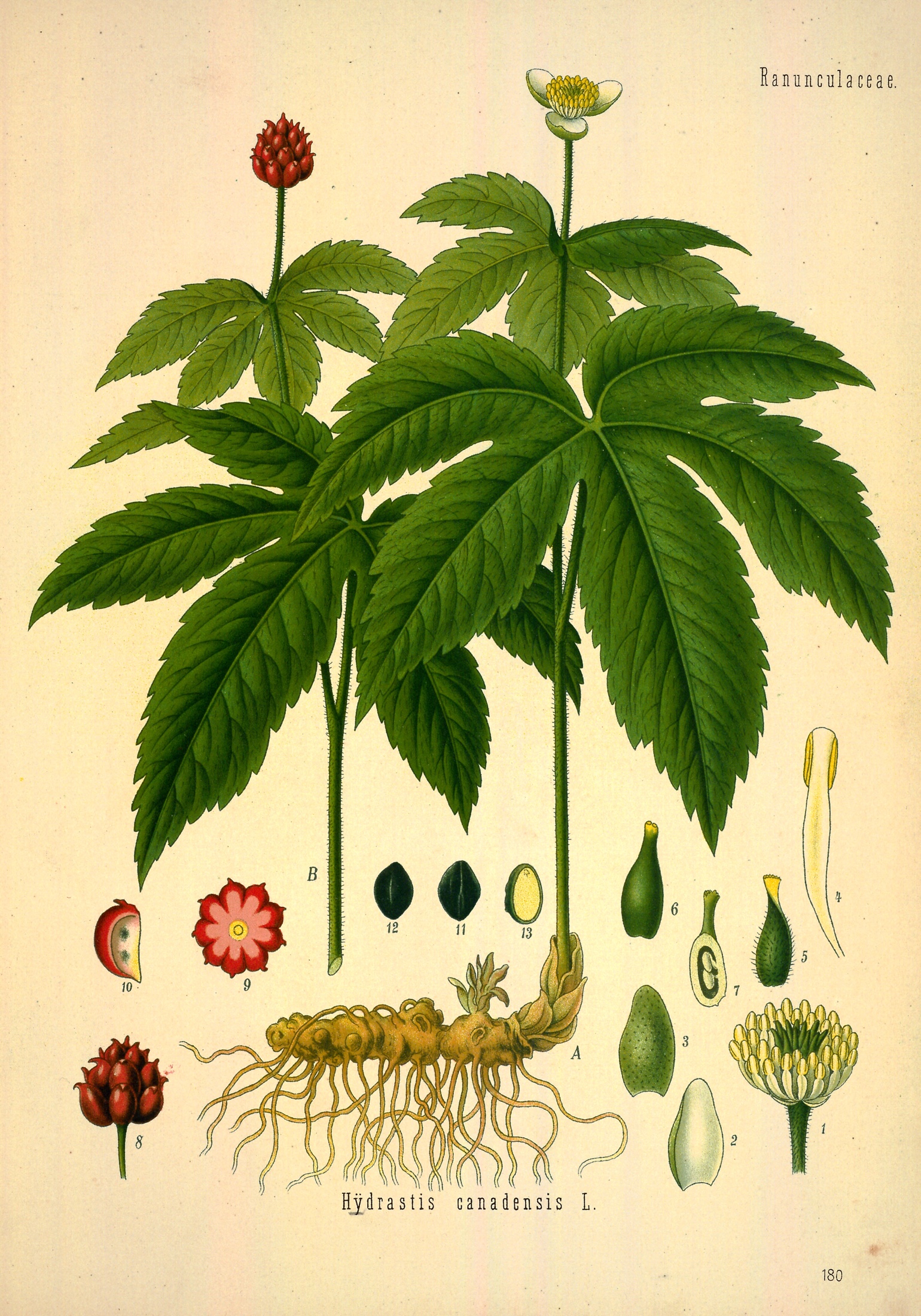
A North American woodland plant prized for its bright yellow root, used by Indigenous peoples and 19th-century herbalists for infections of the skin and mucous membranes. Berberine, the main active compound, has real antimicrobial action — but goldenseal is also seriously over-harvested in the wild.
- Topical use eases minor skin and mucous membrane infections
- Traditional use as a wash for sore throat, mouth ulcers, and minor wounds
- Berberine has real antimicrobial action against many bacteria, fungi, and parasites
- Often combined with echinacea in cold-and-flu formulas, though this combination has limited evidence
- Best evidence is for topical and short-term use — not for systemic infections
Goldenseal is critically over-harvested — look for cultivated, not wild-harvested, sources to support its survival
Berberine interacts with many medications by affecting how the liver metabolizes them — caution with prescription drugs in general
Skip during pregnancy — berberine can cross the placenta and may cause newborn jaundice (kernicterus risk)
Skip during nursing — can transfer to infants and cause kernicterus
Use caution with high blood pressure — large doses can affect blood pressure
Limit continuous use to a few weeks
Does not mask drug tests — that myth has been thoroughly debunked
Related literature · not reviewed for these claims
These papers were imported by topic. They may concern plants, laboratory work, or different preparations. Inclusion here does not establish a human health benefit or support the claims above. How to read our sources →
- Marked Improvement in Treatment-Intolerant Obsessive-Compulsive Disorder in an Adolescent Using a Glutamatergic Regimen With Dextromethorphan, Piracetam, and Goldenseal Root.
- Synergistic antifungal effects of botanical extracts against Candida albicans.
- Machine learning-guided in Silico identification of Na⁺-NQR inhibitors from Berberis vulgaris and Hydrastis Canadensis phytochemicals against Vibrio cholerae.
- In vitro evaluation the spectrum of antibacterial activity of botanical extracts and activity enhancement with outer membrane permeabilizers.
- Next-generation antibacterial cryogels: Berberine-infused smart membranes with molecular docking-guided targeting of MRSA and MDR E. coli.
You might also explore