Mugwort
Artemisia vulgaris
also known as mugwort herb
Moderate (traditional)
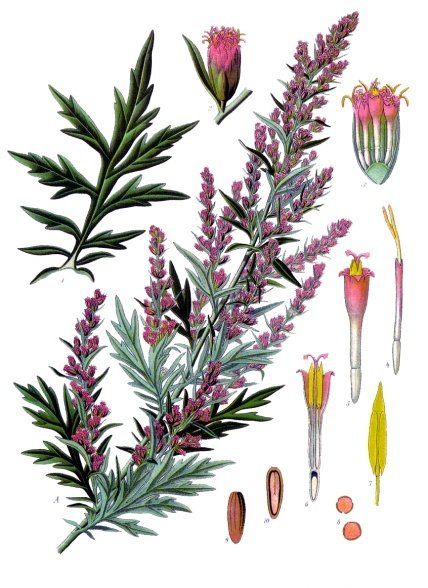
A wild, slightly bitter herb in the same family as wormwood and tarragon. Mugwort has been associated with women's health, digestion, and dreaming across European, Chinese, and Indigenous traditions for over two thousand years — and is the herb burned in moxibustion, the heat-and-smoke companion to acupuncture.
- Long traditional use as a women's herb — for menstrual irregularities, painful periods, and easing labor
- Bitter digestive support — stimulates appetite, eases bloating, supports bile flow
- Mild calming and sleep effects in traditional use
- Known across cultures for its connection to vivid dreams when taken before bed
- The dried herb is burned as moxa in traditional Chinese medicine, applied near acupuncture points to warm and stimulate the body
Skip during pregnancy — can stimulate the uterus
Skip during nursing
Cross-reactive with ragweed, birch, and celery allergies (the 'mugwort-birch-celery syndrome' is well-documented)
Contains thujone, the same compound found in wormwood — high doses or long-term use can affect the nervous system
Can trigger contact dermatitis in sensitive people
Use caution with anti-seizure medications
Related literature · not reviewed for these claims
These papers were imported by topic. They may concern plants, laboratory work, or different preparations. Inclusion here does not establish a human health benefit or support the claims above. How to read our sources →
- Regional Differences in Sensitization Patterns Among Children with Allergic Asthma in China: A Latent Class Analysis and Age-Related Characteristics.
- Assessment of Heavy Metal Accumulation in Soils and Dominant Agricultural Crops in an Industrial Environment of Ridder, East Kazakhstan Region.
- The Wild Plants from the Family Asteraceae That Are Traditionally Used for Food in Sicily and Bulgaria and Their Health Benefits.
- Synthesis and characterization of novel PVA/walnut shell-based composite films: a potential for biomedical applications.
- Historical texts as a potential resource for plant-based antiviral agents against SARS-CoV-2: the example of the Receptarium of Burkhard III von Hallwyl from 16th-century Switzerland.
You might also explore
Common questions
Mostly women's health and digestion. Mugwort has centuries of traditional use for menstrual irregularities and painful periods, plus bitter digestive support that stimulates appetite and eases bloating.
NIH NCCIH
No, skip it entirely, including nursing. Mugwort can stimulate the uterus.
This is one of its most talked-about traditional uses. Mugwort has long been associated with vivid dreaming when taken before bed across multiple cultures, though this is based on tradition rather than rigorous modern research.
Be cautious. Mugwort is cross-reactive with ragweed, birch, and celery allergies, a well-documented pattern sometimes called mugwort-birch-celery syndrome.