
Juniper
also known as juniper berry
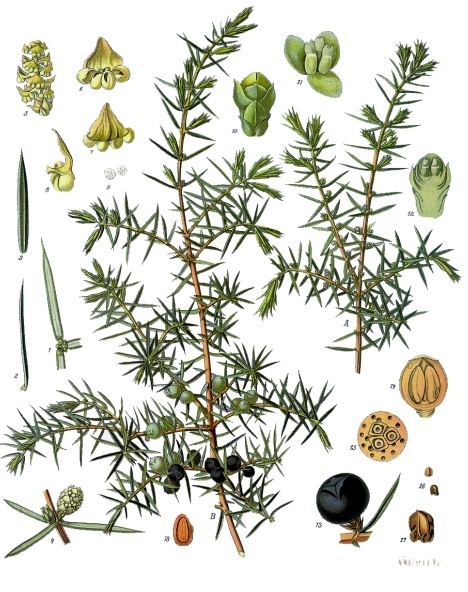
An evergreen shrub whose blue-black berries flavor gin and have a long traditional use as a urinary tract herb. Juniper works as a mild diuretic and antiseptic — but it can irritate the kidneys with extended use, so short courses only.
- Mild diuretic action
- Traditional antiseptic for urinary tract support
- Carminative — eases gas and bloating
- Topical use for minor muscle and joint discomfort
- Distinctive piney flavor used widely in cooking and beverages
Related literature · not reviewed for these claims
These papers were imported by topic. They may concern plants, laboratory work, or different preparations. Inclusion here does not establish a human health benefit or support the claims above. How to read our sources →
- Reduced snow cover at the alpine treeline: resistance and recovery of saplings.
- Biologically Active Compounds from Bark of Juniperus communis (Cupressaceae).
- LC-MS/MS characterization, biological activity, and carbonic anhydrase inhibitory potential of five medicinal plant extracts from Romania and Türkiye.
- NaOH-Only Pretreated Wood Densification: A Simplified Sulfite-Free Route Across Wood Species.
- Application of juniper (Juniperus communis) essential oil nanoemulsions to control spoilage and pathogenic bacteria in fish.
EMA Herbal Medicinal Product Monographs · American Botanical Council HerbMedPro · Memorial Sloan Kettering About Herbs · EMA Herbal Medicinal Product Monographs · American Botanical Council HerbMedPro