Wormwood
also known as absinthe wormwood
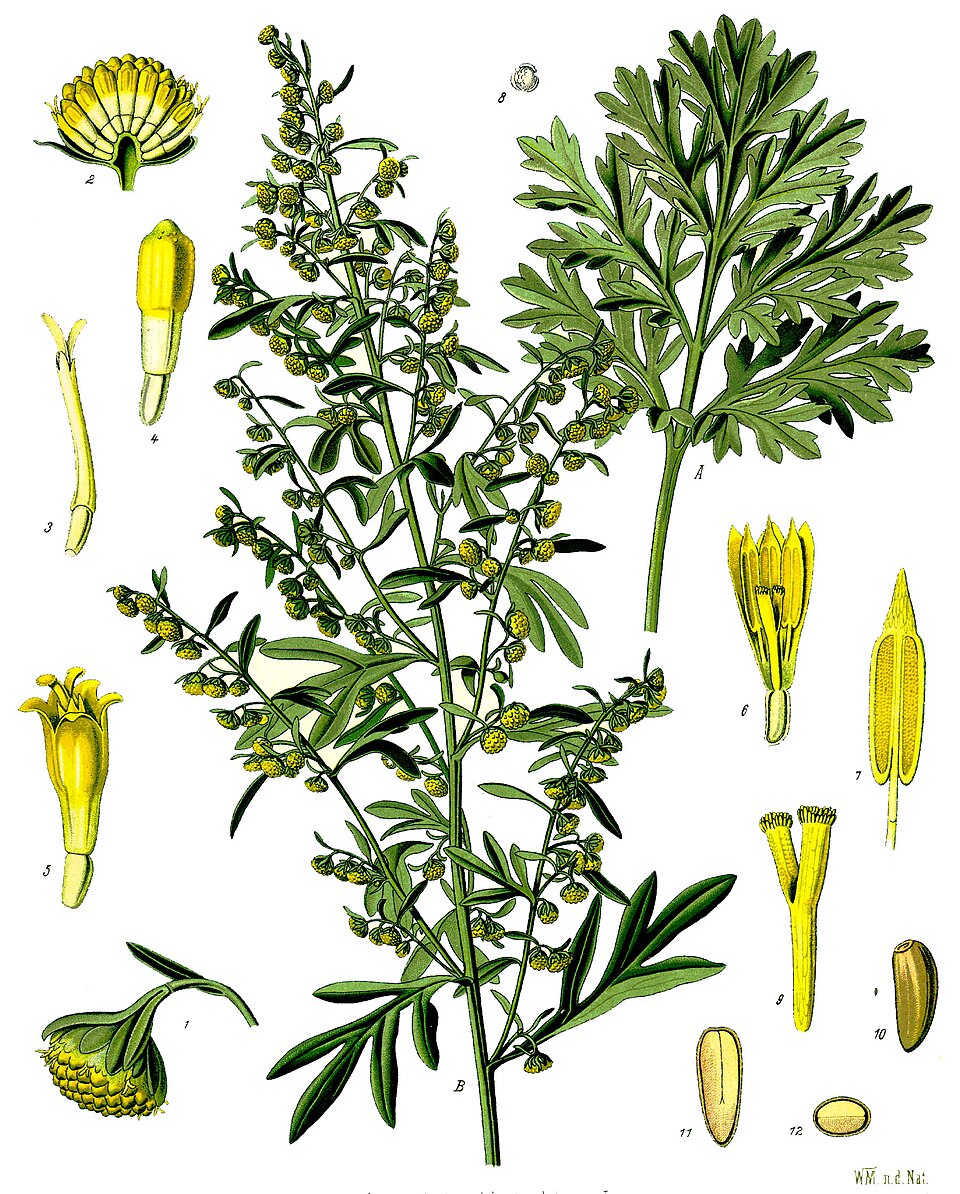
A silvery, bitter herb famous as the flavoring of absinthe — the green-tinged spirit French poets and painters used in the 19th century before bans spread across Europe. Wormwood has a long traditional use for parasites and digestive complaints, and the bitter compounds genuinely stimulate digestion. But wormwood also contains thujone, a nervous system compound that can trigger seizures at sustained or high doses. Short courses, with respect, are the way it has been safely used for centuries.
- Traditional and modern use as an antiparasitic — particularly for intestinal worms (the name 'wormwood' is literal)
- Bitter digestive stimulant — eases bloating, indigestion, and sluggish digestion when used briefly
- Long traditional European use as an appetite stimulant during recovery from illness
- Active in laboratory studies against several types of intestinal parasites
- Artemisinin, a related compound from sweet wormwood (Artemisia annua), is the source of the modern antimalarial drugs that have saved millions of lives
- Best used in short courses — a couple of weeks at most — under qualified guidance
EMA Herbal Medicinal Product Monographs · American Botanical Council HerbMedPro · Memorial Sloan Kettering About Herbs · EMA Herbal Medicinal Product Monographs · American Botanical Council HerbMedPro