
Cayenne
also known as capsicum, chili pepper
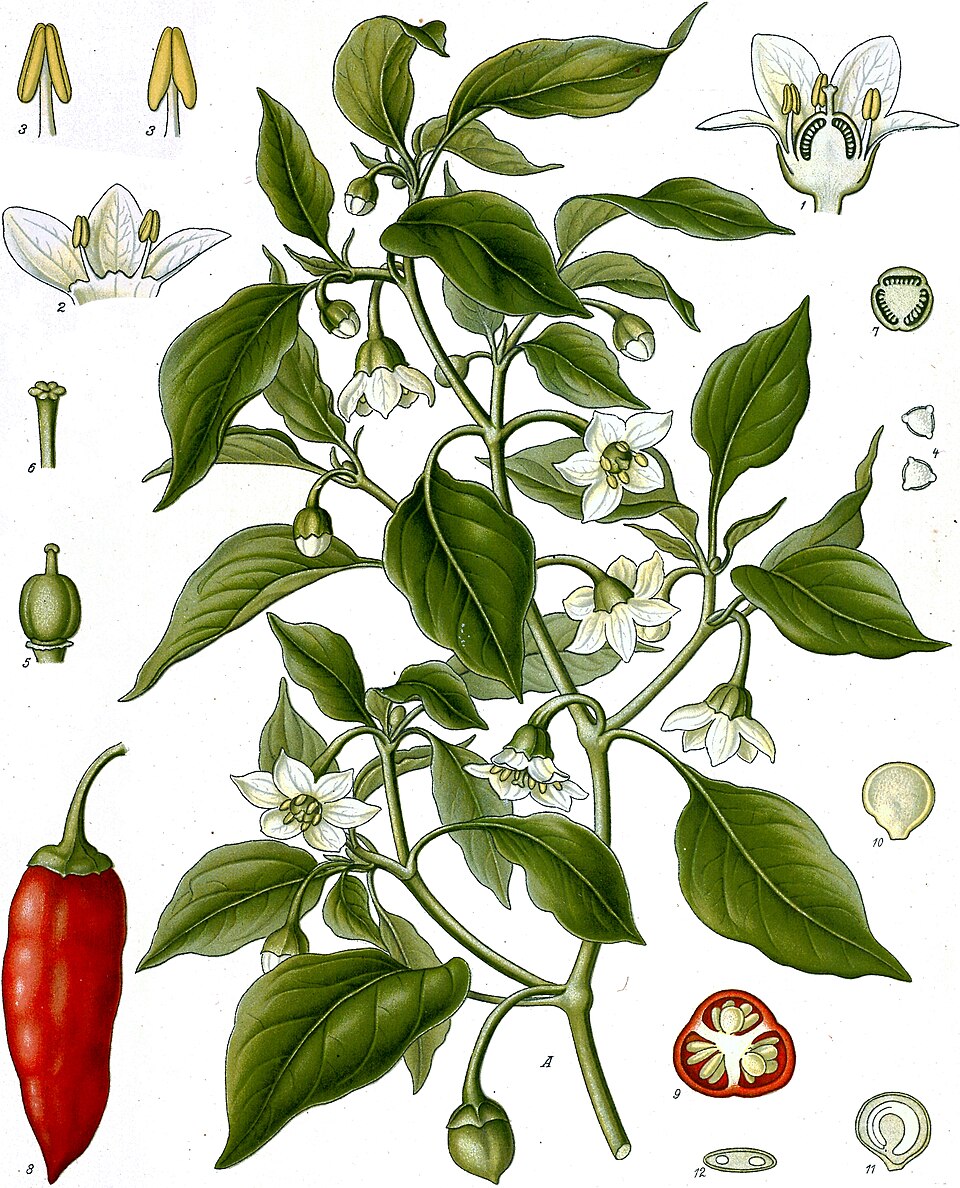
A red pepper used as both spice and medicine. The heat comes from capsaicin, the same compound that triggers a burning sensation — and capsaicin cream has some of the strongest pain-relief evidence in the herbal world.
- Topical capsaicin cream eases nerve pain — diabetic neuropathy, lingering pain after shingles, HIV-related nerve pain
- Topical capsaicin eases osteoarthritis pain — one of its best-studied uses
- Works by depleting substance P, the chemical messenger nerves use to send pain signals — relief builds over days of consistent use
- Long traditional use as a digestive stimulant
- May modestly increase the body's calorie burn when eaten regularly
Related literature · not reviewed for these claims
These papers were imported by topic. They may concern plants, laboratory work, or different preparations. Inclusion here does not establish a human health benefit or support the claims above. How to read our sources →
- Characterization of 12 Capsicum varieties by evaluation of their carotenoid profile and pungency determination
- Metabolite biodiversity in pepper (Capsicum) fruits of thirty-two diverse accessions: Variation in health-related compounds and implications for breeding
- Capsicum: historical and botanical perspectives
- Changes in Phytochemical and Antioxidant Activity of Selected Pepper Cultivars (<i>Capsicum </i>Species) As Influenced by Maturity
- Capsaicin: A Chemical Probe for Sensory Neuron Mechanisms
Memorial Sloan Kettering About Herbs · EMA Herbal Medicinal Product Monographs · American Botanical Council HerbMedPro · Memorial Sloan Kettering About Herbs · EMA Herbal Medicinal Product Monographs · American Botanical Council HerbMedPro
What have you used cayenne pepper for?