
Arnica
also known as mountain arnica
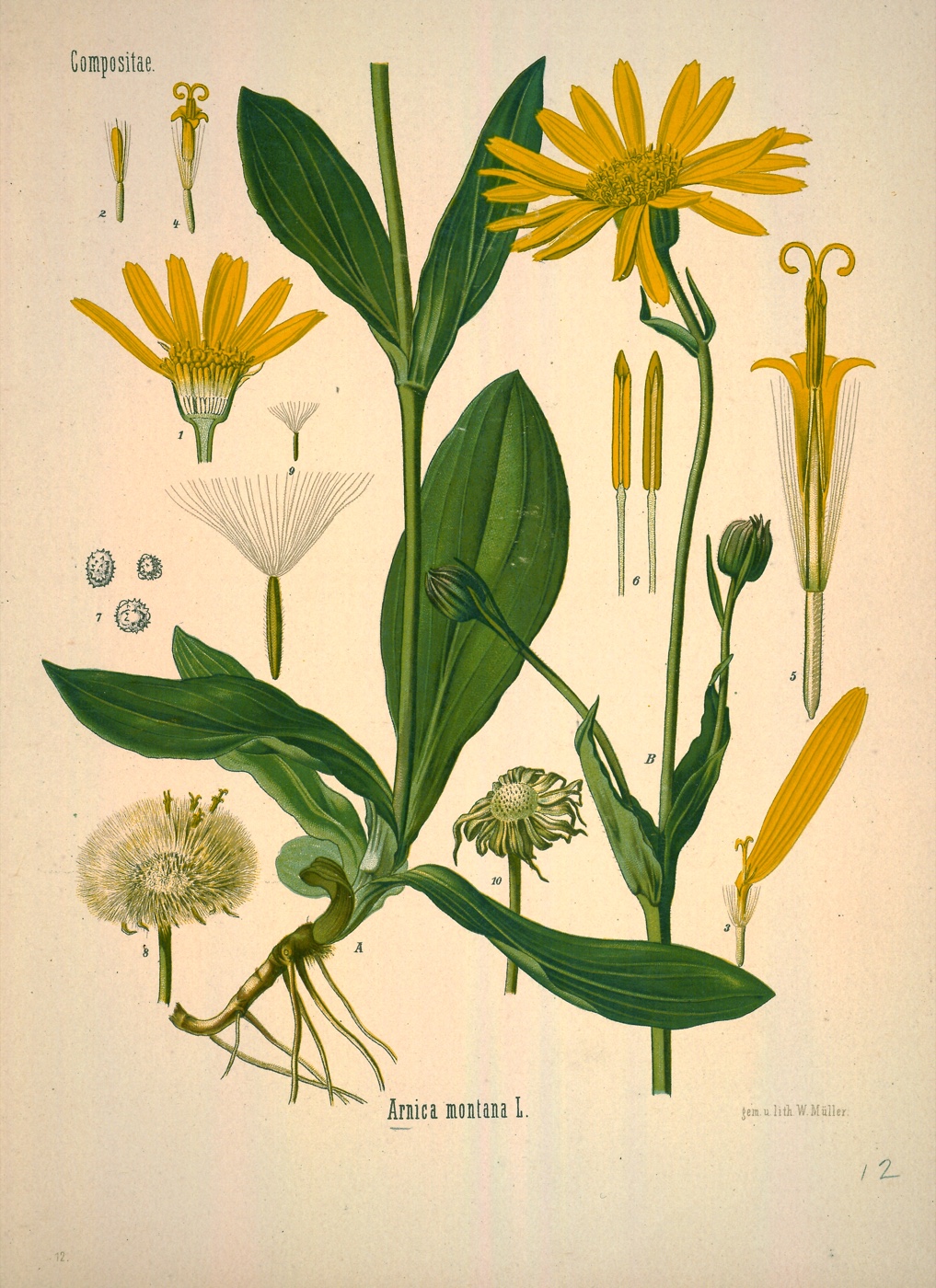
A bright yellow alpine wildflower used in European medicine for centuries as a topical remedy for bruises, sprains, and muscle soreness. Arnica is one of the genuinely useful topical anti-inflammatory herbs — but the same compounds that make it effective also make it toxic to swallow. The rule is simple: arnica goes on skin, never in the mouth.
- Topical arnica gel or cream eases bruising, swelling, and soreness from minor injuries
- Eases muscle soreness after exercise
- Topical use after surgery may reduce bruising and swelling — used by some surgeons before and after procedures
- Long traditional European use specifically for bumps, bruises, and physical injury
- Approved by Germany's Commission E for external use on bruises, sprains, and muscle soreness
- Homeopathic arnica (highly diluted) is considered safe for internal use; the herbal preparation is not
Related literature · not reviewed for these claims
These papers were imported by topic. They may concern plants, laboratory work, or different preparations. Inclusion here does not establish a human health benefit or support the claims above. How to read our sources →
- Identification and characterization of five anti-mitotic sesquiterpene lactones from Arnica cordifolia.
- Hyaluronic-Acid Nanocapsules with Plant Extracts: Characterization and Antimicrobial Activity Against Skin Microbiota.
- Assessment of Likelihood Ratio of the Medicines Enlisted under the Rubric "Pain, Knee, Motion, Amelioration" in the Extremities Chapter of Kent's Repertory.
- Sesquiterpene lactones in micropropagated Arnica montana shoots after elicitation-insights into metabolite accumulation and transcriptional regulation.
- Correction: Distinct Arnica montana L. extracts modulate human T cell activation in different ways via differential inhibition of NFκB and NFAT pathways.
Memorial Sloan Kettering About Herbs · EMA Herbal Medicinal Product Monographs · American Botanical Council HerbMedPro · Memorial Sloan Kettering About Herbs · EMA Herbal Medicinal Product Monographs · American Botanical Council HerbMedPro